The dark doesn’t punish you. It soothes you.
Fires We Carried
Book One
The Snow That Fell into the Stars
Jordan P. Vasconcellos
Coming soon
Edinburgh, 1591. A town hunting witches, and a girl who can read the weather in people.
I · Watch
See it before you read it.
The Witches Who Wrecked a Queen’s Voyage
- 0:00Storms and a royal bride
- 0:37I · The storm and the confessions
- 1:32II · How a witch was tried
- 2:40III · Burned on Castlehill
- 3:20IV · The King’s book and the law
- 4:31V · The fear that stayed
- 6:27An apology, but no pardon
Read the episode as text
0:00 Storms and a royal bride
In 1589 and 1590, storms battered the ships carrying King James VI and his new queen, Anna of Denmark. Scotland went looking for someone to blame. It found them in North Berwick. I’m Jordan P. Vasconcellos. This is From the Old Town, where I dig into the real history behind my books.
0:37 I · The storm and the confessions
James married Anna in Norway in late 1589. When they sailed home to Leith in the spring of 1590, the voyage was battered by storms. In Denmark, officials blamed witches and held trials of their own. In Scotland, the same idea took hold.
It began with a maidservant, Geillis Duncan. Her forced confession named others and the names spread. A healer, Agnes Sampson. A schoolmaster, John Fian.
Two Edinburgh gentlewomen, Euphame MacCalzean and Barbara Napier, and astonishingly, a nobleman, the Earl of Bothwell.
1:32 II · How a witch was tried
How did an accusation become an execution? Historians say many accusations grew out of everyday quarrels between neighbours. A local kirk session could investigate a suspect, but it could not execute anyone. For a trial, local men needed a commission from the Privy Council or Parliament, and most Scottish witches were tried in courts like these. Some suspects were searched by witch-prickers: men who claimed they could find the Devil’s mark by pricking the skin with pins. We know of about ten professional prickers in Scotland.
King James questioned suspects himself, some of them at Holyrood, and a London pamphlet, News from Scotland, spread the story far beyond Edinburgh. Remember, though, a pamphlet is propaganda, not a court record.
2:40 III · Burned on Castlehill
On the 28th of January, 1591, Agnes Sampson was strangled and burned on Castlehill below Edinburgh Castle. That was how most Scottish witches died: strangled at the stake, then burned. Euphame MacCalzean was sentenced to burn that June.
Not everyone was condemned. Barbara Napier was partly acquitted, and then the jury that acquitted her was put on trial. Bothwell, jailed in the castle, simply escaped.
3:20 IV · The King’s book and the law
Six years later, James published a book on witchcraft, Daemonologie, in Edinburgh. Scotland’s Witchcraft Act had been law since 1563. By the time it was repealed, in 1736, about 3,837 people had been accused. About 84% of them were women.
Scotland was not alone. Across Europe, most historians estimate between 40,000 and 60,000 people were executed for witchcraft. You may have heard 9 million. That number is a myth.
About 3 in 4 of the accused across Europe were women. In Scotland, it was even higher, and Scotland hunted hard. The historian Julian Goodare estimates that Scotland executed witches at about five times the European average rate for its size.
Many scholars link the witches of Macbeth, written around 1606, to King James’s interest in witchcraft.
4:31 V · The fear that stayed
Below the castle lay the Nor’ Loch, a man-made loch, dammed in the mid-1400s to defend the town. You may have heard that Edinburgh ducked its witches there. The records don’t support it. But in May 1562, the council did order a place in the loch, prepared for ducking, with a pulley. Not for witches: for fornicators.
I’m writing The Fires We Carried, a saga set in these same Edinburgh streets. In my novel, the Nor’ Loch takes Sable. That part is fiction.
The fear behind it was real. The loch is gone now. Its bed lies under Princes Street Gardens and Waverley Station. Across the Forth stood Dunfermline.
Its palace became Queen Anna’s own residence, and in 1600, she gave birth there to the future King Charles I, the last monarch born in Scotland. The fear followed the court’s story into Fife. In 1643, a town register records six Dunfermline women burned as witches.
In 1704, at Torryburn near Dunfermline, a woman named Lilias Adie died in custody before she could be tried. She was buried on the shore, under a stone slab. In 1852, her skull was taken, and it has since been lost. In 2017, forensic artists at the University of Dundee rebuilt her face from old photographs.
6:27 An apology, but no pardon
In 2022, Scotland’s First Minister formally apologised to everyone accused under the Witchcraft Act. No legal pardon has been passed. The Fires We Carried is a story about who gets to hold power and who gets burned by it. Book One, The Snow That Fell into the Stars, is coming soon.
They blamed witches for a storm at sea
II · From the Old Town
Historical record
The witch trials were real.
A royal bride, two stormy crossings, and a country that wanted someone to blame. What followed is on record.
1563–1736
Scotland’s Witchcraft Act was in force
3,837
people known to have been accused of witchcraft in Scotland
84%
of the accused were women
2022
Scotland’s First Minister apologised. There is still no pardon.

News from Scotland, 1591
A woodcut printed in London: the storm, the Devil and the witches as the printer imagined them. This is a pamphlet’s tale, not a court record.

James VI
King of Scots, and from 1603 of England too. He questioned the accused in person. Portrait engraved by Pieter de Jode, 1603.

Daemonologie
The King wrote his own book on demons and witches, first printed in Edinburgh in 1597. His preface calls witches ‘these detestable slaves of the devil’.
1603 London edition · Wellcome Collection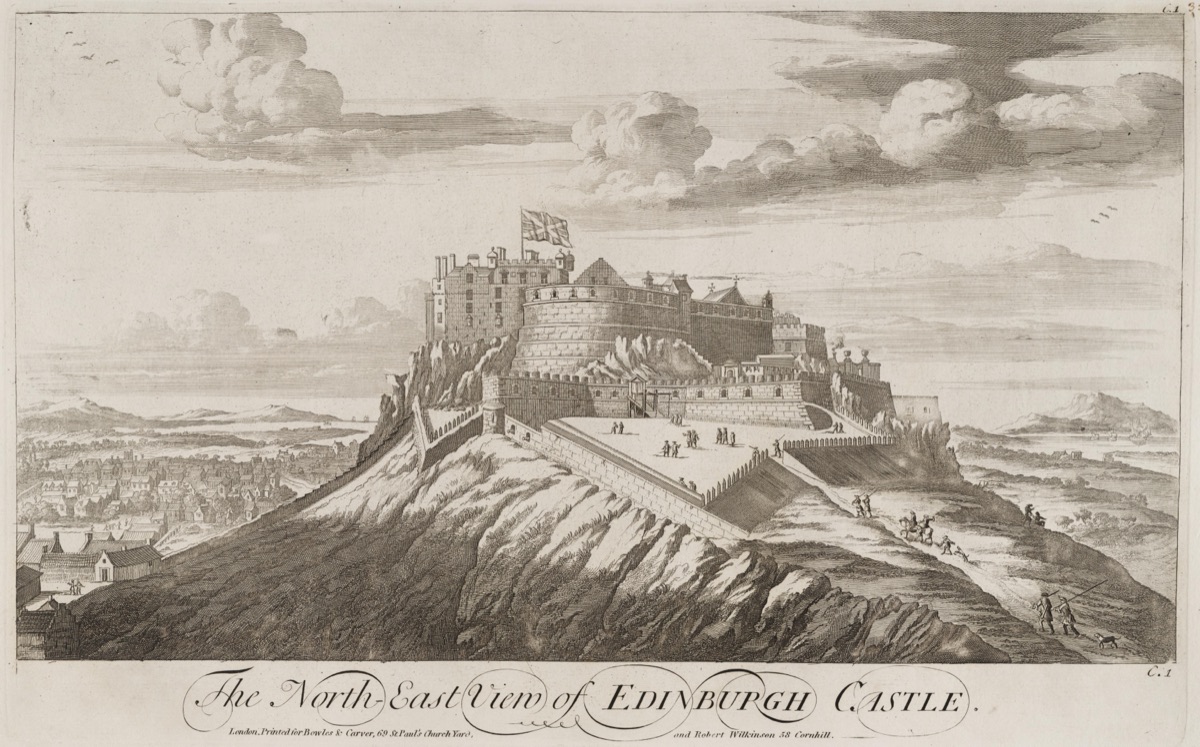
Edinburgh Castle
Castlehill, where the condemned were put to death, is the open ground in front of the castle gate. Engraved by John Slezer in the late 1600s.
Historical record
Hold a flame.
Every number was a person. Most were ordinary neighbours: older, outspoken, or on the wrong side of a quarrel. Their names survive because courts, kirk sessions and clerks wrote them down. Here is one of them.
Lilias Adie
Torryburn, Fife · 1704
Held for more than a month and questioned by the parish minister, she refused to name anyone else. She died in custody before she could be tried, and was buried between the tide marks.
Read her recordGeillis Duncan
Tranent, East Lothian · 1590
A maidservant who had started curing the sick. According to the pamphlet News from Scotland, her master had her tortured with thumbscrews and a cord twisted round her head until she confessed and named others.
Read her recordAgnes Sampson
Castlehill, Edinburgh · 1591
A folk healer who helped women through childbirth. Her care for them was turned into evidence against her. She died at the stake on Castlehill in January 1591.
Read her recordEuphame MacCalzean
Edinburgh · 1591
The only daughter and heiress of a judge. On 15 June 1591 she was condemned to be burned alive on Castlehill, without the usual mercy of strangling first. She died there on 25 June.
Read her recordBessie Dunlop
Lyne, Ayrshire · 1576
She told her judges that a dead man, sent by the fairy queen, had taught her to heal with herbs. She was found guilty and sentenced to death.
Read her recordAlison Pearson
Byrehill, Fife · 1588
At her trial she spoke of the fairy court, its queen, and a spirit who taught her to cure the sick. She was condemned.
Read her recordSix women of Dunfermline
Dunfermline, Fife · 1643
Grissel Morris, Margaret Brand, Katherine Elder, Agnes Kirk, Margaret Donaldson and Isobel Millar were burned as witches, according to the town’s records as quoted in 1879.
Read their record
Behind this invented story are real women and men whose lives were reduced to accusations of witchcraft. To hold a flame for the innocent is to care who stands unprotected beside us today.
From the author’s note to Book One
Go deeper
Three rooms beneath the story.

What was witchcraft?
Charms, herbs and the fairy court; forced confessions; and who was most at risk.
Enter the record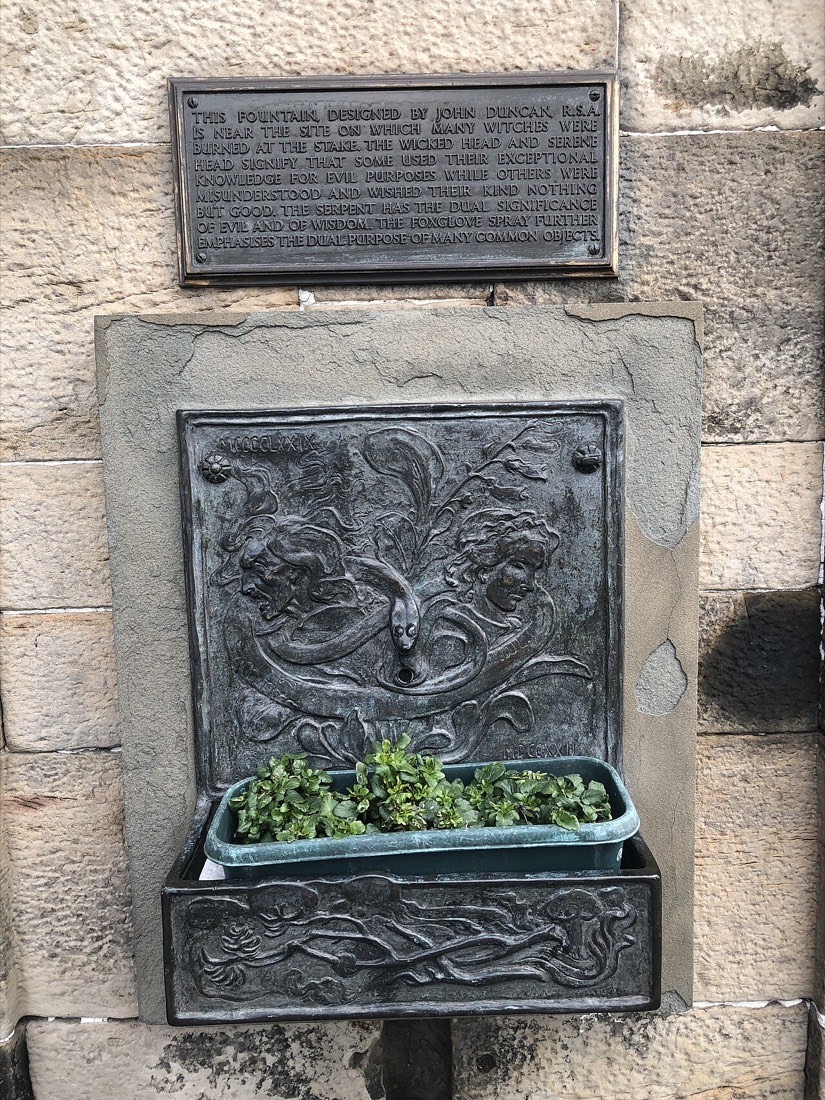
The Road North
From Castlehill in Edinburgh, across the Firth of Forth at the Queen’s Ferry, to Dunfermline, Hospital Hill and a shore grave at Torryburn, in Fife.
Walk the road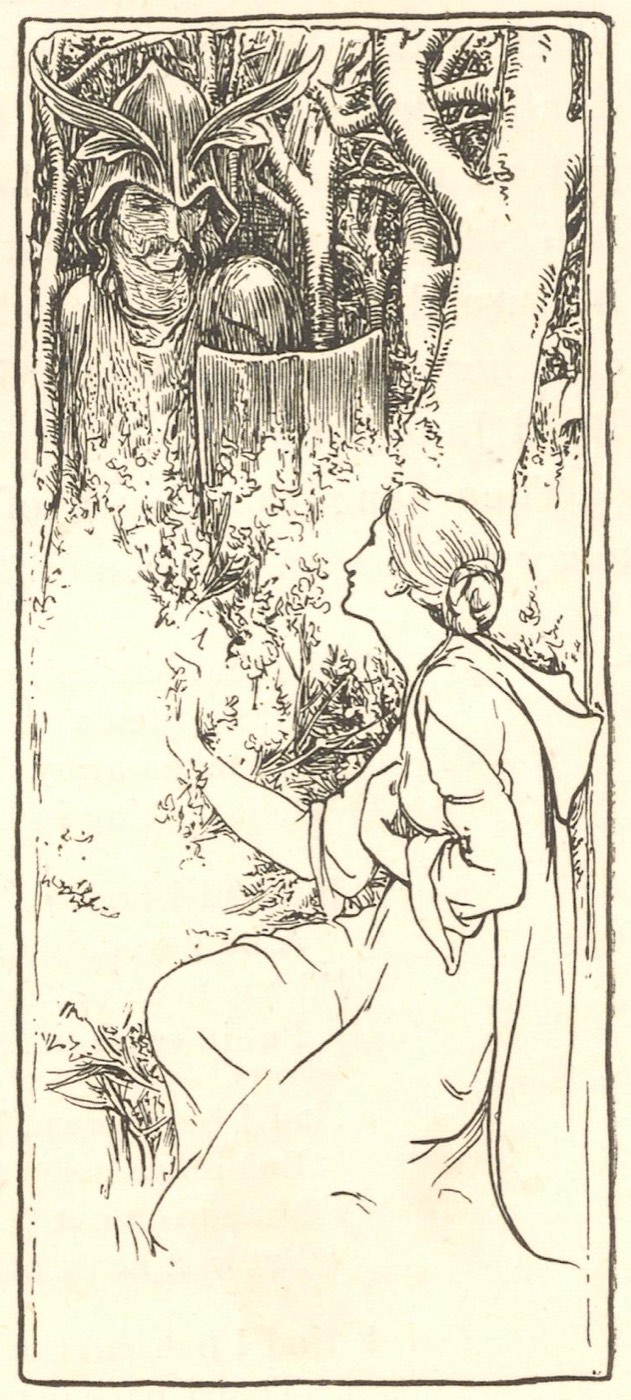
Old Tales
Janet and Tam Lin, the seal wife, Kate Crackernuts and Black Agnes: Scotland’s old stories of wonder, and some true ones.
Read by candlelightHere the record ends.
Here the book begins.
III · The Saga
From the novel
One world. Eleven books.
For readers who notice who the story leaves out.
What follows is invented.
A battle that begins in the narrow closes of Edinburgh reaches across five centuries into the future of the whole Earth. Each book holds a great Wonder of its own. Each age finds a new way to let the enemy in.
Book One
The Snow That Fell into the Stars
Sorsha sees what others cannot: the weight a person carries and can’t put down. She calls it reading the weather. In an Edinburgh that hunts witches, she tells no one.
One cold market morning, the crush of bodies carries her to a widow named Alison, bound to a post. A hooded stranger called the Warden draws a thin grey thread from beneath Alison’s collarbone, and the widow smiles at the people burning her. The crowd sees mercy. Sorsha knows she has watched a robbery.
In 1591 her mother’s iron ring passes to her. It has only two answers. Warm for the truth. Cold for the lie. She begins to learn the craft from the Keepers, who risk their lives to care for others. When her sister Sable gives birth to a son, Ninian, the falling snow stops, then rises into the stars. Morag Sutherland sees the power she has been waiting for. In a town where comfort can be theft, who will notice in time?
‘Nine million witches were burned.’ Warm or cold? Test the ring
From the novelHere is a door; here is a light still kept for you.
Be the first to see the cover.
You’ll hear the publication date first, and get Chapters Two and Three, read by me, once they’re recorded. Join now for a free walking map of the witch-trial sites on the road from Edinburgh to Dunfermline. About one letter a month; leave whenever you like.
One step left. Open the email from Jordan P. Vasconcellos and press the button inside. Your map is waiting behind it.
Nothing there? Check your junk folder.
By joining you agree to the privacy notice.
IV · Questions
What readers ask
When is Book One coming out?
There’s no date yet. When there is, everyone on the mailing list will hear first.
Who is it for?
Younger readers and adults. It’s written for both at once and doesn’t talk down to either.
Is it based on real events?
The setting is real: Edinburgh during Scotland’s witch trials. A few real people appear, but the main characters and the magic are invented. For the true stories behind it, watch my YouTube series, From the Old Town.
From the novel · Historical record
Has Scotland pardoned the accused?
No. On 8 March 2022 the First Minister, Nicola Sturgeon, formally apologised to those accused under the Witchcraft Act. A proposed bill to pardon them was withdrawn on 19 April 2023, and none has become law. The Witches of Scotland campaign is still pressing for a pardon and a national memorial. (Last checked 14 November 2026.)
Historical record
Can you visit my school, library or festival?
Yes. Email enquiries@thefireswecarried.com and tell me where and when.
Press, events and rights: see the press kit. Teachers and librarians: the classroom pages are free to use. Anything else: enquiries@thefireswecarried.com

Mary King’s Close, an old Edinburgh street
V · The Author
Jordan P. Vasconcellos
The Fires We Carried has been more than ten years in the making, and it begins here, in Edinburgh’s Old Town. While I finish Book One, I tell the true stories behind it on YouTube, in a series called From the Old Town, so you always know which parts really happened.

1591
Agnes Sampson was strangled at the stake on Castlehill on 28 January, and her body was burned.
Historical record
Something patient is waiting.
Book One
The Snow That Fell into the Stars
Jordan P. Vasconcellos
Coming soon
Sources and credits
Sources
- Survey of Scottish Witchcraft, University of Edinburgh (2003): the figures 3,837 and 84%, the years 1563–1736, Agnes Sampson’s execution. Link
- Historic Environment Scotland: Castlehill, the Witches’ Well and the Witchcraft Act. Link
- University of Glasgow, ‘The Damned Art’: the North Berwick trials and News from Scotland.
- J. D. Marwick (ed.), Extracts from the Records of the Burgh of Edinburgh 1557–1571 (1875), p. 135: the Nor’ Loch ducking order of 1562.
- Scottish Government, First Minister’s apology, 8 March 2022; Scottish Parliament; Witches of Scotland. Link
- James VI, Daemonologie (1597); News from Scotland (London, 1591; original spelling ‘Newes from Scotland’). Link
Pictures and film
- News from Scotland woodcut · 1816 facsimile · British Library · public domain
- James VI · Pieter de Jode I, 1603 · The Metropolitan Museum of Art · public domain
- Daemonologie, preface · 1603 London edition · Wellcome Collection · public domain
- Edinburgh Castle · John Slezer, late 1600s · public domain
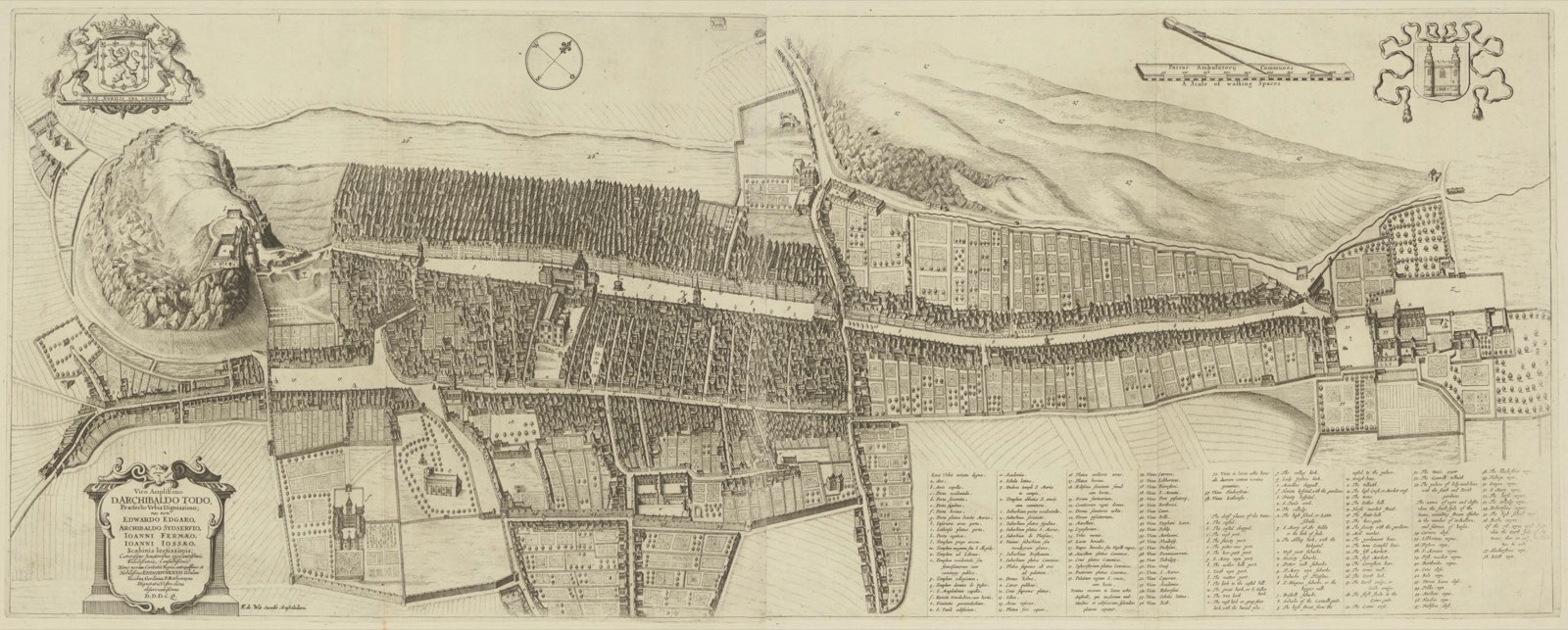
- Edinburgh in 1647 · James Gordon of Rothiemay, c.1700 issue · Utrecht University Library · public domain
- Charm against toothache · Science Museum / Wellcome Collection · CC BY 4.0
- The Witches’ Well · photo: Lila · CC BY-SA 4.0
- Tamlane · John D. Batten, 1894 · public domain
- Moving backgrounds and fire · present-day footage from Pexels, used for atmosphere only; it does not show the historical places.

